Friday, December 25, 2009

OXO Peugeot Concept Car

OXO Peugeot Concept Car

The OXO concept is a direct reference to the numbering of Peugeot models. Initially called "x0x", the name of this concept wanted to take the central 0 of the Lion Marque and was surrounded by two "xx" to demonstrate its futuristic character.
However, in view of the special nature of this concept car, articulated around an"X-shaped" axis, the inversion of the 0 and the X gave it its name "OXO".
Resolutely modern and environmentally-friendly, the Peugeot OXO is a 100% electric vehicle.
Peugeot OXO Its big major innovation lies in its articulation since the "X" system allows it to reduce its size considerably when parking, as well as during driving, as for example going through narrow streets.
With its highly creative wheel system, this concept car can move sideways, pivot around itself… its urban mobility is optimum.
Another innovation is the use of a "Peugeot Phone" console that allows the driver to control the vehicle manually or in automatic.
The "Stress-free driving" option enables the two occupants to optimise their trip or quite simply relax and enjoy the landscape.

OXO Peugeot Concept Car

Leonin Hybrid Peugeot Concept Car by Tudoran Liviu


Leonin Hybrid Peugeot Concept Car
Designed to compliment the iconic Peugeot Lion, Liviu Tudoran has created a conceptual battery powered vehicle which could in theory reach speeds of up to 160 km/h and have a range of approximately 500km on a single charge. Developed under the theme “Imagine the Peugeot in the Worldwide Megalopolis of Tomorrow,” the conceptual vehicle is entitled Leonin, rather appropriately!
The Leonin, is a futuristic car that came to life in the fifth Peugeot design competition. The Leonin is a hybrid car that gained its name from the behavior of a lion. It comes with a battery below its hood and an electric engine in the back.

Leonin Hybrid Peugeot Concept Car
It features bright orange trims that make the dark and orange combo look spectacular. The doors open upwards to reveal a comfortable cabin for two. The highlight however is the orange band that goes over the rear wheels.
The body of the car is finished with aluminum composite, hard plastic, carbon fiber and glass, giving a foolproof protection to commuters in case of an accident. Replacing the interior rearview mirror, the hybrid features an LCD screen in the main console to display the video captured by the hi-resolution camera located at the rear of the car. The Leonin would set you back something between €18,000 and €25,000, according to the intensity of technology and equipment used in the car.

Leonin Hybrid Peugeot
Concept Car


Leonin Hybrid Peugeot Concept Car

STEM - Electric Concept Vehicle for Urban Environment

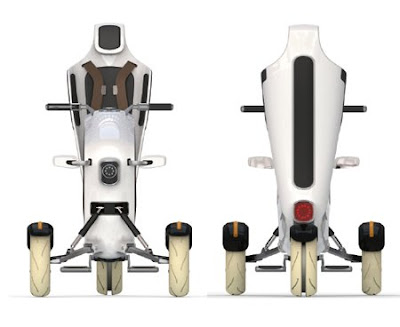
STEM Electric Concept Vehicle - Fron and Rear View

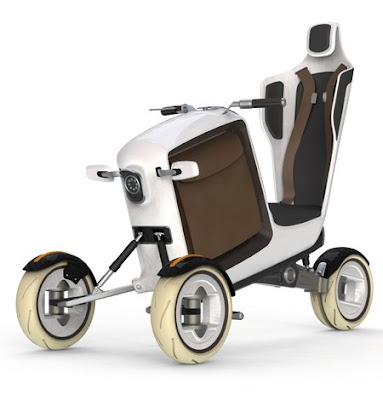
STEM is a lightweight and small Electric Concept Vehicle aimed for urban use which is ideal for short distance rides like commuter traffic, shopping-tours or the way to work. This three wheeled city-vehicle is a perfect alternative of the traditional cars that are being used in the city area. This vehicle has a modular case located in the front side of the vehicle which can be used as a storage unit for small and light loads, moreover, you can remove this if you want.

STEM Electric Concept Vehicle - Rear Right Side View

To enrich the alternative mobility, STEM Electric Concept Vehicle is empowered with an electric engine and lithium-based batteries to accumulate the energy located under the seat and charging can be done by plugging-in any standard power socket. The uniquely forward lean main body is designed against the driving direction and the precise edges and clean surfaces add up to an important impression of the design.

STEM Electric Concept Vehicle - Front Right Side View

STEM Electric Concept Vehicle is envisioned to be publicly used and therefore, an additional rental station infrastructure has also been developed where people will be able to rent this vehicle for short period of time from all over the city. When you will reach your destination, you can return it to another rental station that is nearest from where you are.

STEM Electric Concept Vehicle - Panel

Thursday, December 24, 2009

Warna Cerah, Tren Warna Pelapis Interior Mobil 2010

TEMPO Interaktif, Jakarta:Tren perubahan di dunia otomotif tak beda jauh dengan di dunia fesyen, tak terkecuali dalam warna. Setelah demam warna cerah - putih misalnya - menggejala di kalangan pemilik mobil, kini giliran tren warna ceria dengan ragam kombinasinya telah menjangkiti pemilik mobil. Diperkirakan, corak warna itu akan menjadi tren di 2010 mendatang.

jok tomato "Warna cerah seperti hijau dipadukan dengan neon green, tropicana, pop green dan tropicana terlihat cerah, sejuk dan sesuai tema sekarang yang go green ramah lingkungan. Meskipun warna cerah tapi nggak norak, tetapi tetap elegan. Saya kira ini akan jadi tren ke depan," aku Kevin Oktaviano, pemilik mobil Toyota Yaris yang membalut interior mobilnya dengan warna kombinasi hijau, saat ditemui Tempo di Balai Kartini, Jakarta, Rabu (23/12).

Bagi mahasiswa sebuah perguruan tinggi swasta ternama di Grogol, Jakarta Barat, itu warna cerah identik dengan optimisme dan keceriaan. "Tidak monoton, dulu orang suka warna hitam atau beige (krem) menjadi idola, kalau sekarang mulai ditinggalkan, khususnya di kalangan anak muda. Tapi kalau orang tua maungkin saja, untuk kesan konservatif," tutur dia.

Pendapat Kevin diamini Helsa Pratiwi, Sales Supervisor PT Polystar International, pemegang merek produk automotive synthetic leather MBtech di Indonesia. Bahkan, kata Helsa, pihaknya sejak beberapa bulan yang lalu gencar mengkampanyekan penggunaan warna-warna cerah tersebut.

"Hasilnya cukup menggembirakan, lima varian yang kami perkenalkan Oktober lalu mendapatkan sambutan positif. Ini terlihat dari permintaan yang cukup tinggi, satu varian saja yaitu varian Camaro mencapai 23.000 meter," sebut dia saat ditemui Tempo di arena pameran mobil klasik di Balai Kartini.

jok mobil MBtechBahkan Helsa mengatakan, warna-warna yang sebelumnya tidak diminati orang kini justeru dicari. Warna Tomato misalnya, di kalangan konsumen usia muda justeru menjadi warna yang banyak dicari. Hal itu juga diakui Kevin. "Warna ceria semacam merah dan gradasi nya itu memiliki aura pembangkit semangat, itu cocok bagi anak muda," imbuh Kevin.

Namun, Helsa menambahkan tren warna seperti itu bukan hanya digemari oleh kalangan muda saja, tetapi juga orang yang lebih dewasa. Hanya memang, ada perbedaan diantara dua kelompok konsumen tersebut terutama dalam kombinasi warna pilihan. "Intinya tren warna cerah itu untuk semua umur. Hanya corak kombinasinya saja mungkin yang berbeda," terangnya.

Sementara menurut Edi Pamungkas, Technical Brand Manager PT Polystar dalam penggunaan bahan pelapis interior mobil saat ini tidak mengacu pada warna dashboard. Malah, tak sedikit orang yang menggunakan warna sedikit kontras dengan dashboard. "Misalnya dashboard hitam kemudian warna jok dan door trim dibalut dengan MBtech warna deep purple atau flamboyant. Intinya masih ada nuansa yang senada," terang Edi.

MBtech saat ini menguasai pangsa pasar produk pelapis interior sintetik di tanah air. Dari total penjualan produk itu yang mencapai sekitar 250 ribu meter per tahun, MBtech terjual sekitar sekitar 150 ribu meter.

Baik Edi maupun Helsa mengaku, untuk mempertahankan posisi sebagai pemimpin pasar, MBtech terus melakukan inovasi produk baik dengan menambah varian produk maupun peningkatan kualitas misalnya mudah dibersihkan. Saat ini lima varian yang telah diluncurkan MBtech, yaitu Camaro, Superior, Camaro Fiesta, Sporty, dan Picasso.

Ankonian Mid Engined Lamborghini Concept Car


Ankonian
Mid Engined Lamborghini Concept Car by Slavche Tanevski

The mid-engined Lamborghini Ankonian designed by Slavche Tanevski is a proposal for a more compact sized Lamborghini supercar employing both 'soft' and angular surfaces in the design. It has a rather narrow body, cab backward classical GT silhouette, and complexity of soft and angular surfaces.
The power and potential of the car are represented through this complexity of the main body, which is rather softly and elegant designed, and the angular, stealthy and sharp elements.
The main themes behind the concept are "underground" and "hardcore". These are achieved by the angular forms, but mostly with the color combination of shiny black and matt dark grey. The big canyons and the skinny tail give the car a very light appearance.

Ankonian Mid Engined Lamborghini Concept Car by Slavche Tanevski
The mid-engined supercar has a narrow and rather complex-looking body, with a garnishing of GT proportions. Thin OLEDs embedded between the surfaces function as headlights, and while all those lines may look weird, the Ankonian supposedly makes the best use of it all. The concept was named after a bull type famous for black hair, and since the designer had some help from professional designers at Lamborghini and Audi, the finished model has impressive looks.
According to the designer, the Ankonian takes the design of the Reventon to the next level, even though the concept itself manages a unique expression. The supercar concept has a more aggressive design, and is downsized to account for a more environment-friendly status, though it does not include any hybrid or similar technologies.

Ankonian Mid Engined Lamborghini Concept Car by Slavche Tanevski

Here's the press release:
"Following the Lamborghini tradition I named the car “Ankonian” after the bull type which is famous for his black hair (that’s why I chose black).
The concept is a mid-engined supercar that is not “green”, but yet shows environmental responsibility, and therefore is downsized.
I didn’t choose the today’s midengine supercar clichés (extreme width, cab forward, aggressive graphical elements), but a rather narrow body, cab backward classical GT silhouette, and complexity/combination of soft and angular surfaces. Instead of showing power and aggression through some wild graphical elements (for example headlights) I achieved the same through the complexity of the main body which is rather softly designed, (and has a flair of the Italian elegance), and the angular, stealthy and sharp elements which remind of shields.

Ankonian Mid Engined Lamborghini Concept Car by Slavche Tanevski
Concerning the design language, I put the Reventòn style to the next level, even more aggressive and crazy, but yet elegant, and more harmonious.
The main themes behind the concept, which actually make the chosen design language even stronger, are ‘underground’ and ‘hardcore’. This is achieved by the triangular forms, for example, but mostly with the color combination of shiny black and matt dark grey.
During the design process we brought back the tradition (we did it old school)-clay modeling instead of CAD modeling. It took approx. 6 months to actually build the model and it was a great opportunity to try different possibilities concerning the surface management and the proportions. This how the design doesn’t look ‘artificial’, but mature, and due to the fact that we had constant support by Lamborghini and Audi Advanced designers, the final designs have professional touch.

Ankonian Mid Engined Lamborghini Concept Car by Slavche Tanevski
Even though very crazy and on first glance complicated, all Ankonian lines and intersections work together. Due to the tension in the lines and the concave and convex surfaces there is an impression of a strong and dynamic body. The big canyons and the fact that the tail was put on a diet give it a very light appearance. In addition, the hot-rod stance gives it a push forward, and the symbolic presence of wings and the arrow-like door graphic make the car very dynamical, even when it is in standing position.
By leaving the usual headlight graphics, and having very thin OLEDs embedded between the surfaces, an eccentric and mysterious feeling is achieved. The same principle was applied at the back too, by doing an alien-like face with two big exhausts as eyes, and diffuser as mouth. Again, the lights are put on a position man would not expect (read: shock value). "

Kizashi Suzuki Concept Car


Kizashi Suzuki Concept Car
The Kizashi concept is designed to take Suzuki into a new vehicle segment, in line with the company's aim to move more upmarket and mainstream with their offerings.
The Suzuki Kizashi is a dramatic design, especially from the front where the enormous tapering grille blends into the aggressive slit-eyed LED headlights.
The Suzuki Kizashi concept, meaning 'Prelude' in Japanese, is a striking four-door family car concept which debuted at the 2007 Frankfurt Motor Show.
The D-segment initiative- the kizashi revealed in Frankfurt represents the beginning of the third phase of the world strategy. The main objective of this phase is status. The first phase of the new world strategy was implemented with the focus on ‘Sporty’, a philosophy that resulted in great success with the launch of Swift, Grand Vitara and SX4. The new Splash represents the second phase for Suzuki.
Suzuki which was founded in 1909 is regarded as the best small car maker all over the world. But despite the small car sucess, Suzuki has not been able to continue many of the customers to stay with the automaker when purchasing subsequent, larger cars. Suzuki feels obliged to respond to increasing expectations and is convinced that it’s essential to offer a wider product range in order to accommodate customers’ diverse lifestyles. Consequently, Suzuki has decided to expand its lineup to cover all segments from A to D in the next few years. Suzuki’s first-ever D-segment car ‘kizashi’ will stand at the top of the range. Suzuki’s new plan will be reflected in its Indian line-up too.

Kizashi Suzuki Concept Car
Suzuki which already sources larger cars from General Motors will now make its own D segment car through its kizashi concept. Suzuki targets an uncompromised combination of affordability and emotional appeal with the new kizashi. Suzuki which has already given a sporty hatchback -the Swift Sport plans to carry the same for the D-segment. At the same time, kizashi will ensure the cabin roominess that is essential in the D-segment
Down the sides there is a strong shoulder line which gives the concept a powerful stance, and coupled with the low roofline the car has a sporting appearance despite the estate car profile. The front door handles are inconspicuous despite their chrome finish, while the rear door handles are hidden in the rear side window frame.
At the rear of the Kizashi concept the lines are clear and crisp with the taillights flowing from the shoulder line into the rear hatch beautifully. The twin inset chrome exhausts positioned either side of the bumper finish of the rear perfectly.


Kizashi Suzuki Concept Car
Though the Suzuki’s kizashi concept is powered by a new 2.0-liter turbo diesel, Suzuki plans to use a hybrid arrangement (an internal combustion engine provides the main propulsion, and an electric motor provides assistance whenever extra power is needed) to achieve environmental compatibility. Kizashi’s dynamic performance will be enhanced all-wheel drive (AWD) a technology that Suzuki has refined over many years.
In Indian context, Maruti may strap its 1.6L SX4 engine or a 2.0L vitara engine into the kizashi. Suzuki says its Kizashi is planned as the automaker’s future competitor to the Accord and Camry. But Indian news agencies says the ‘big car’(kizashi) from the Maruti Suzuki will compete with the likes of Honda Civic, Toyota Corolla and Skoda Octavia.

Electric Light Car Open Source EDAG Concept Car


Electric Light Car Open Source EDAG Concept
Car

For the body concept of the “Light Car - Open Source”, EDAG has broken new ground, and for the first time ever in automotive engineering, used ASA.TEC's innovative basalt fibre, a lightweight, stable and - above all - 100% recyclable material. Propulsion is taken care of by intelligent, electric drive systems in the wheels, which not only feature a high degree of efficiency to get the power of the lithium-ion batteries onto the road, but will also provide considerably greater creative scope for the vehicle package. In addition, with its innovative light concept, the "Light Car - Open Source" will be one of the first vehicles to utilise (O)LED technology as an individually adaptable design and communication element.
The car's exterior dimensions - 4 metres long and 1.70 metres wide - put it in the compact car size range. As both engine and gearbox have been eliminated, the wheelbase has been extended to 2.90 metres - on a luxury class level - which offers enough space to seat five passengers in comfort.
The electric powertrain adopts in-wheel motors and lithium-ion. A multifunctional system integrated in the wheels integrates various components: steering, brakes, drive and suspension. The glass surfaces are made of Makrolon.
The body concept of the "Light Car - Open Source" is based on a rolling chassis - an universal platform to which the modules for various bodies can be added. This enables vehicle derivatives to be developed more quickly and at lower cost.
This almost infinitely available raw material is not just lighter and less costly than aluminium or carbon, but also has practically the same strength properties as conventional materials.

Electric Light Car Open Source EDAG Concept Car
"This new quality of basalt fibre, which is to be utilised in the construction of rotors for large-scale wind power plants in the future, can now be put to systematic use in the automotive industry.
"This type of basalt fibre therefore has the potential for becoming a main structural element and thus being used as a future lightweight material in cars for the high volume market."
With its innovative light concept and minimalised lighting technology, the "Light Car - Open Source" is one of the first vehicles to use (O)LED technology as a variable design and communication element. Not until it is started up does the "Light Car - Open Source", with a body that looks as though it is made of glass, come to life and reveal its true looks. In the glass panes, (O)LED lamps mark out the outlines of the headlights and rear lights on the "Light Car - Open Source". The driver can design the outlines of the lights to his individual taste to give the car a unique appearance, something he is already used to doing, from setting up his PC desktop. The driver also has a free hand when it comes to arranging his "workplace" in the cockpit. Whether he wants the tachometer in the middle or the climate control gauge on the right-hand side, the driver can individually configure his cockpit as far as size, position and style of the instruments is concerned.
"We have transferred today's multimedia and lighting technology standards to the car, and in future want to offer the customer scope for free configuration, as the entire surface of the vehicle functions like the monitor of a multimedia installation, and can be used intelligently and individually," explains Johannes Barckmann, Head of the EDAG Design Studio.
With the aid of state-of-the-art (O)LED technology, EDAG uses the transparent tailgate as a projection screen, making car-to-car communication visible and usable to all motorists. For instance, the braking force can be communicated to the next vehicle by means of an illuminated scale on the back of the car. Other information, such as a distance reading or if there is the tail end of a traffic jam ahead, can be clearly displayed on the back of the car, even if the vehicle behind does not have a car-to-car communication system of its own. Further, the driver of the car behind can see the information straight away, without needing to take his eyes off the road!

Electric Light Car Open Source EDAG Concept Car
The drive concept of the light car is based on an all-electric, monovalent drive system with a range of up to 150 kilometres, making it eminently suitable for everyday use. The matter of propulsion is taken care of by intelligent, electric drive systems in the wheels, which not only feature a high degree of efficiency to get the power of the lithium-ion batteries in the rolling chassis onto the road, but will also provide considerably greater creative scope for the vehicle package. This is made possible by a system integrated in the wheels, which consolidates a number of functions: steering, brakes, drive and suspension.
Many of the technologies shown today are still in the early stages of their development. For this reason, EDAG regards this as an open source project, and approaches other companies with which it can then work on the development of the EDAG Light Car. The company has made a deliberate decision to address itself to a wide circle, thus enabling new notions to be absorbed in the car of the future. Computer and software developers are to apply their new technologies in exactly the same way as ASA.TEC basalt fibre, (O)LED technology or electric drive specialists do.

Template by : kendhin x-template.blogspot.com